Maybe She Wasn’t Resistant to Technology After All
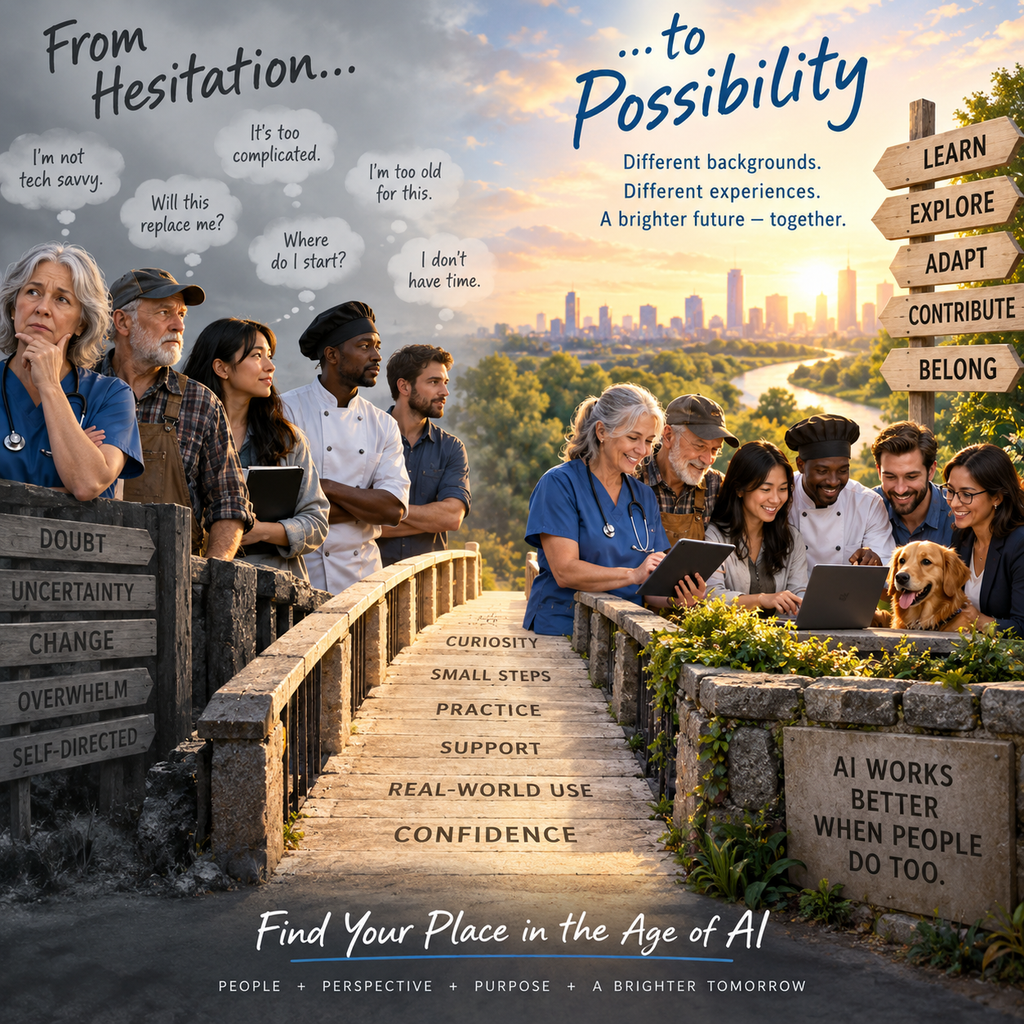
I’ve known the lady since the 1990s.
She’s a registered nurse, and over the years I’ve watched her relationship with technology change. For a long time, I would have described her as resistant to it.
I’m beginning to think I was wrong.
She wasn’t necessarily resistant to technology.
She may have been resistant to technology that didn’t respect what she knew.
When Technology Came to Nursing
If you’ve worked in healthcare for any length of time, you’ve probably seen this story play out.
A new system arrives.
It’s going to streamline documentation. Improve patient records. Standardize charts. Increase efficiency. Make information easier to share.
And somewhere in the process, the nurse who actually knows the patient is sitting in front of a computer trying to figure out which box contains what she needs to say.
That’s an important distinction.
For an experienced RN, a patient isn’t a collection of fields in a database.
There are things you notice because you’ve seen them before.
There are questions you ask because something doesn’t quite look right.
There are details you include in a note because you know the next nurse needs to see them.
There are times when every number on the chart looks acceptable, but years of experience tell you to pay closer attention.
That’s judgment.
And judgment is difficult to put into a dropdown menu.
Maybe the Resistance Made Sense
Looking back, I wonder how often we mislabeled people like my friend.
We called them resistant to technology.
Maybe some of them were.
But perhaps others were asking a perfectly reasonable question:
Does this technology help me do my work, or does it make me change my work to accommodate the technology?
Those are not the same thing.
For much of the computer era, people had to learn the language of the machine.
You learned commands.
You learned menus.
You learned where the right field was.
You learned which button to click.
You learned what the system would accept and, sometimes more importantly, what it wouldn’t.
Eventually, you became proficient at operating the system.
But the system didn’t necessarily become proficient at understanding you.
Then Something Changed
Recently I’ve watched Anthony’s mom become increasingly comfortable with technology.
More interestingly, she seems genuinely interested in what she can do with it.
That’s what caught my attention.
Because I know the woman.
This isn’t someone suddenly deciding that every new piece of technology is wonderful.
The technology itself has changed.
With conversational AI, she doesn’t always have to figure out how the computer wants the question asked.
She can simply ask the question.
She can explain what she’s trying to accomplish.
She can add context.
She can say, “No, that’s not what I meant.”
She can question an answer.
She can continue the conversation.
For perhaps the first time in her relationship with computers, the burden of translation is beginning to shift.
Instead of the human constantly learning how to speak computer, the computer is learning how to work with human language.
That is a much bigger change than it may initially appear.
Experience Didn’t Become Obsolete
This is also why I think we’re having the wrong conversation when we talk about experienced workers and artificial intelligence.
We keep asking whether they can learn AI.
Of course they can.
The more interesting question is what happens when someone with thirty or forty years of accumulated judgment suddenly has access to technology capable of helping them apply it in new ways.
My friend’s nursing experience didn’t become obsolete when AI arrived.
Quite the opposite.
AI doesn’t have her decades at the bedside.
It hasn’t watched a patient and thought, Something isn’t right here.
It hasn’t learned which seemingly insignificant detail becomes important three hours later.
It hasn’t developed the instincts that come from seeing thousands of individual human beings rather than thousands of rows of data.
She has.
That’s what she brings to the relationship.
The technology brings something else.
It can help organize information, explore possibilities, explain unfamiliar subjects, draft material, compare ideas, and perform dozens of other tasks quickly.
Put those two things together and something much more interesting happens than either “AI replaces people” or “people need to learn AI.”
You begin creating a partnership between capability and experience.
Find Your Place
That’s really what we’ve been exploring with IncludeMe and Find Your Place in the Age of AI.
You don’t have to throw away everything you know and reinvent yourself as an AI expert.
You don’t have to become fascinated with technology for its own sake.
And you certainly don’t have to pretend every technological change is an improvement.
Your skepticism may even be useful.
Ask questions.
Challenge the answer.
Recognize when something doesn’t make sense.
Bring your experience into the conversation.
Because perhaps the biggest opportunity presented by AI isn’t teaching experienced people how to think like machines.
It is finally building machines flexible enough to work with the way experienced people already think.
And that brings me back to my friend.
Thirty years ago, I probably would have said she was resistant to technology.
Today, I’d describe it differently.
She was waiting for technology to meet her halfway.
It finally may be starting to.
Sometimes people aren’t resistant to technology. They’re resistant to technology that doesn’t respect what they know.